
Introduction: Wix vs WordPress
In 2025, small business owners are faced with the choice between two popular website building platforms: Wix and WordPress. Both platforms offer unique features, benefits, and potential drawbacks. This comprehensive guide aims to help you determine which platform is best suited for your business needs by comparing their features, costs, and user experiences.
Getting Started with Wix
Step 1: Sign Up for a Wix Account
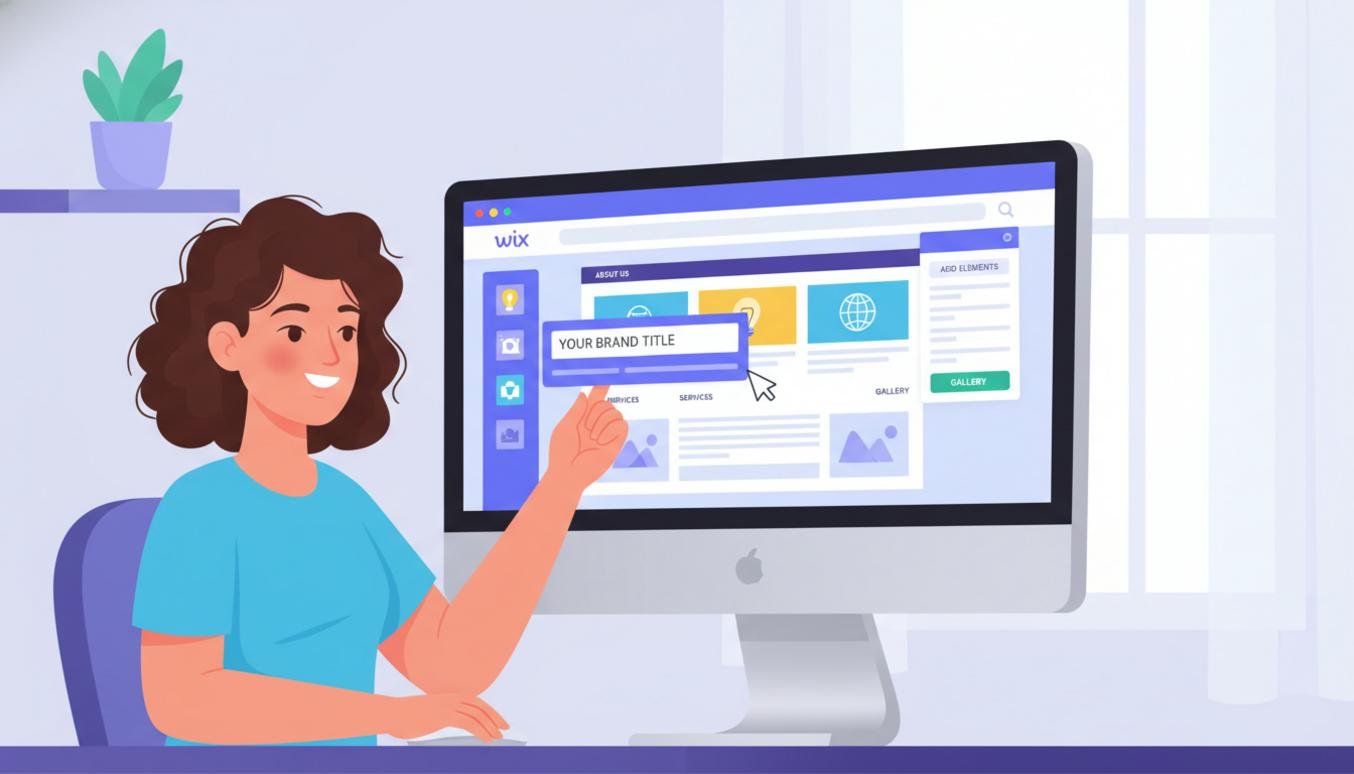
Wix is renowned for its ease of use, making it an ideal choice for beginners who want to create professional-looking websites without any coding knowledge. In this section, we’ll guide you through the initial steps to start building your site on Wix, including signing up, selecting a template, and customizing it to match your brand’s identity.
To begin, navigate to the Wix website and click on “Get Started.” You can sign up using your email address or link your Facebook or Google account for quicker access. Wix offers several plans, ranging from free to premium, each with varying bandwidth and storage capacities. Most small businesses find the “Combo” or “Unlimited” plans to be suitable due to their cost-effectiveness and comprehensive features, including custom domain names and the removal of Wix ads.
User Testimonial: “Signing up was incredibly straightforward, and I appreciated the clear prompts that guided me through the process. The plan options were well-explained, which made it easy to choose the right one for my needs.” — Sarah L., Small Business Owner
Step 2: Choosing a Template
Once your account is set up, the next step is to choose a template. Wix boasts a wide array of templates tailored for different industries, from retail to photography. Browse the template gallery to find a design that resonates with your brand’s style and requirements. Each template is fully customizable, allowing you to tweak everything from the color scheme to the layout.
To preview a template, simply hover over it and click “View.” This feature allows you to ensure the template meets your expectations before making a decision. Once satisfied, click “Edit” to start personalizing it.
Visual Aid: Consider including screenshots of the template selection process to illustrate the variety and ease of making choices.
Step 3: Customizing Your Site
Wix’s drag-and-drop builder is where the magic happens. Designed to be intuitive, this tool allows you to effortlessly personalize your chosen template to reflect your brand identity. You can add text, images, and videos, rearrange elements, and even insert new sections to enhance your site.
A helpful feature is the “Wix ADI” (Artificial Design Intelligence), which can automatically create a site for you based on your answers to a few simple questions. This can be a great starting point for those who prefer minimal setup.
Tip: Utilize the SEO Wiz tool available on Wix to optimize your website’s visibility. This feature helps guide users through basic SEO practices, ensuring your site ranks well on search engines. For more advanced SEO strategies, consider reading about The Smartest Marketing Strategies for Small Businesses in 2025.
User Testimonial: “I loved the drag-and-drop builder! I could easily experiment with different looks until I found the perfect match for my brand. It’s a very powerful tool for someone who isn’t a tech expert.” — Michael R., Entrepreneur
Cost Analysis
Wix’s initial cost can vary based on the plan you choose. While the free plan is quite generous, providing substantial capabilities at no charge, upgrading to a premium plan is advisable for businesses seeking a professional edge. Premium plans begin at around $14 per month, offering features essential for business success like ad-free browsing and access to important analytics.
Conclusion: Getting started with Wix is a seamless process, ideally suited for small business owners looking for a cost-effective, customizable, and user-friendly website building solution. With its vast array of templates and intuitive tools, Wix enables anyone to create a stunning web presence with minimal effort.
Initial Steps with WordPress
WordPress has been a leader in web development platforms, offering unparalleled flexibility, control, and a thriving community of developers and designers ready to assist. In 2025, WordPress remains a top choice for small businesses looking to establish a robust online presence. Here’s how to kickstart your journey with WordPress.
Choose a Host for Your WordPress Site
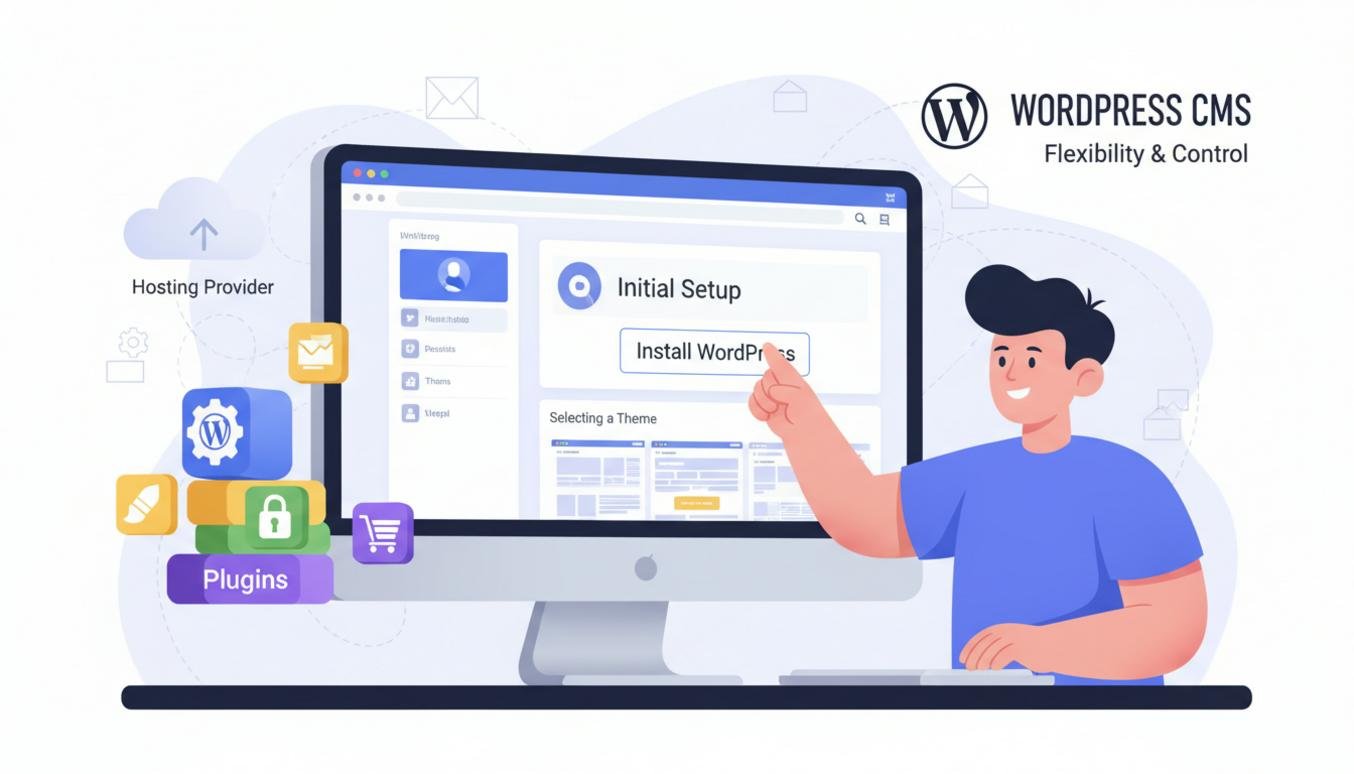
The first step in building your WordPress site is selecting the right hosting provider. A hosting provider stores your site’s data and ensures it remains accessible to users 24/7. Services like Bluehost, SiteGround, and HostGator are popular choices among small business owners for their reliability and seamless WordPress integration.
User Testimonial: “When I started my bakery’s website, I chose SiteGround because of its stellar customer service and WordPress-specific optimizations. It’s been an excellent support for my online business,” shares Linda, a bakery owner from New York.
Installing WordPress
After securing a host, the next step is to install WordPress. Most hosting providers offer a simple, one-click WordPress installation feature that can have your site ready in minutes. Access the control panel provided by your host, look for the WordPress installer, and follow the straightforward setup prompts.
For those who prefer a hands-on approach and want more control over the installation process, manually downloading WordPress from WordPress.org and uploading it to your hosting server could be an exciting challenge. However, this requires some technical know-how.
Selecting a Theme for Your Business
After installation, it’s time to select a theme. WordPress offers thousands of free and premium themes, each customizable to reflect your brand’s personality. When choosing a theme, consider factors like responsiveness, speed, and ease of customization.
Real user feedback can often provide insights into the best themes to use. For instance, Astra and Divi are praised for their flexibility and feature-rich designs suitable for small businesses.
User Feedback: “I opted for the Divi theme for my startup consultancy because of its intuitive page builder and responsive design. Plus, it offers excellent customer support,” says Raj, founder of a consulting firm in Texas.
Customization and Beyond
WordPress’s customization capabilities are vast but may require some technical knowledge, especially when implementing custom code or modifying theme templates. However, many find the learning curve manageable with online courses and extensive documentation available at WordPress’s learning hub.
The platform’s comprehensive plugin library allows you to easily extend your site’s functionality without needing to code. Some essential plugins include Yoast SEO for search optimization, WooCommerce for eCommerce features, and Contact Form 7 for user interaction.
Cost Analysis
Getting started with WordPress can be more cost-effective than you might think. Here’s a breakdown of potential costs:
- Hosting: Approximately $3 to $30 per month, depending on the provider and features.
- Domain Name: About $10 to $15 annually.
- Premium Themes: While free themes are available, premium versions range from $30 to $100.
- Plugins: Many are free, but specialized premium plugins may cost from $10 to $50.
By investing wisely, a small business can create a professional website that fits their budget, enhancing their digital footprint efficiently. You can also explore the latest strategies in small business marketing to integrate with your website plan here.
In summary, getting started with WordPress in 2025 offers unprecedented opportunities for customization and growth. With the right steps, even those with no technical expertise can create an engaging and functional website.
Cost Comparison: Wix vs WordPress
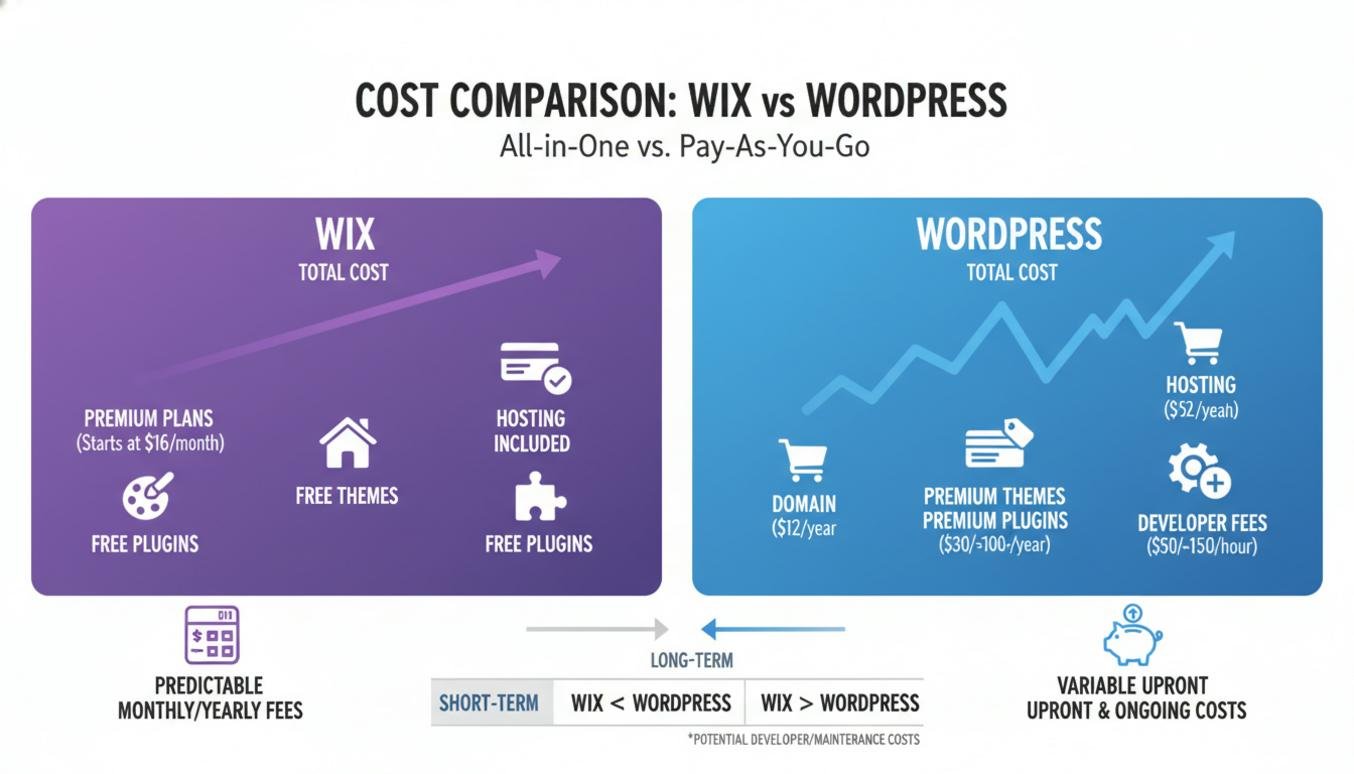
When choosing between Wix and WordPress for your small business website, understanding the cost differences is crucial to making an informed decision. Both platforms offer distinct pricing models that cater to different types of users and budget constraints. In this section, we’ll dive into the nuances of Wix’s all-in-one pricing model versus WordPress’s more flexible pay-as-you-go approach, along with the long-term financial implications of choosing either platform.
Wix: The All-in-One Pricing Model
Wix offers an all-inclusive pricing model, which simplifies budgeting by bundling hosting, domain, and website building tools into one package. This approach is particularly appealing for small businesses that prefer predictable monthly expenses. Wix’s plans start as low as $14 per month for personal use, but the more business-oriented plans range from $23 to $49 per month or more, depending on the business needs.
Inclusions with Wix Plans:
- Website Hosting: Reliable hosting included, reducing the hassle of separate provider fees.
- Domain Name: Free for the first year, then renewals at competitive market rates.
- SSL Certificate: Included in all plans, essential for security and SEO.
- Customer Support: 24/7 support accessible across plans.
Long-term Considerations:
While the predictable cost is appealing, any additional advanced features or large-scale e-commerce functionalities may require an upgrade to Wix’s more expensive plans. Potential hidden costs might include purchasing premium apps or extensions from the Wix App Market.
WordPress: Flexibility Through Pay-As-You-Go
In contrast, WordPress.org, the self-hosted version, offers a pay-as-you-go model that provides greater flexibility for those who wish to control more aspects of their website’s growth and customization.
For further insights into building a successful online presence, consider reading about how to build a strong brand identity.
Initial Costs to Consider:
- Hosting: Depending on the provider, costs can range from $3 to $30 per month. Popular providers like Bluehost or SiteGround offer competitive rates for small business owners.
- Domain Name: Costs around $10-$20 annually after the first free year.
- Themes and Plugins: Basic themes are free, but premium themes can cost between $30 and $100. Plugins can be free or range upwards to $200 annually for those providing advanced features or comprehensive support.
Developer Fees:
Small businesses opting for custom-designed websites or specific functionalities might need to hire developers, which can add substantial costs. A freelance WordPress developer can charge anywhere from $30 to $150 per hour, leading to potential significant expenses over time.
Real User Testimonials
“When I started with Wix, I loved the easy setup and fixed monthly fee. However, as my business grew, I found the customization limited without buying additional apps,” says Jane, a boutique owner.
“WordPress was harder to grasp initially due to the need for separate hosting and domain management, but the long-term flexibility and developer community support were worth it,” comments Daniel, a digital marketing consultant.
Infographic Considerations (placeholder for images)
Create an infographic to visually compare the cost trajectories of Wix and WordPress over a five-year period, helping readers quickly see potential expenses and savings depending on the path chosen.
Conclusion
Choosing Wix or WordPress depends significantly on your business’s budget and need for flexibility. If you’re looking for a straightforward, all-in-one pricing model with minimal setup and foreseeable costs, Wix might be your ideal choice. However, for those who anticipate scaling their business and requiring higher customization, WordPress’s pay-as-you-go model might prove more cost-effective over time. Always consider potential future expenses like advanced plugins and developer fees when making your decision.
SEO Implications of Wix and WordPress
Search Engine Optimization (SEO) is crucial for any online business aiming to enhance visibility and drive traffic. Both Wix and WordPress have distinct approaches to facilitating SEO that affects how users can maximize their search engine rankings.
WordPress: A Powerhouse for SEO Enthusiasts
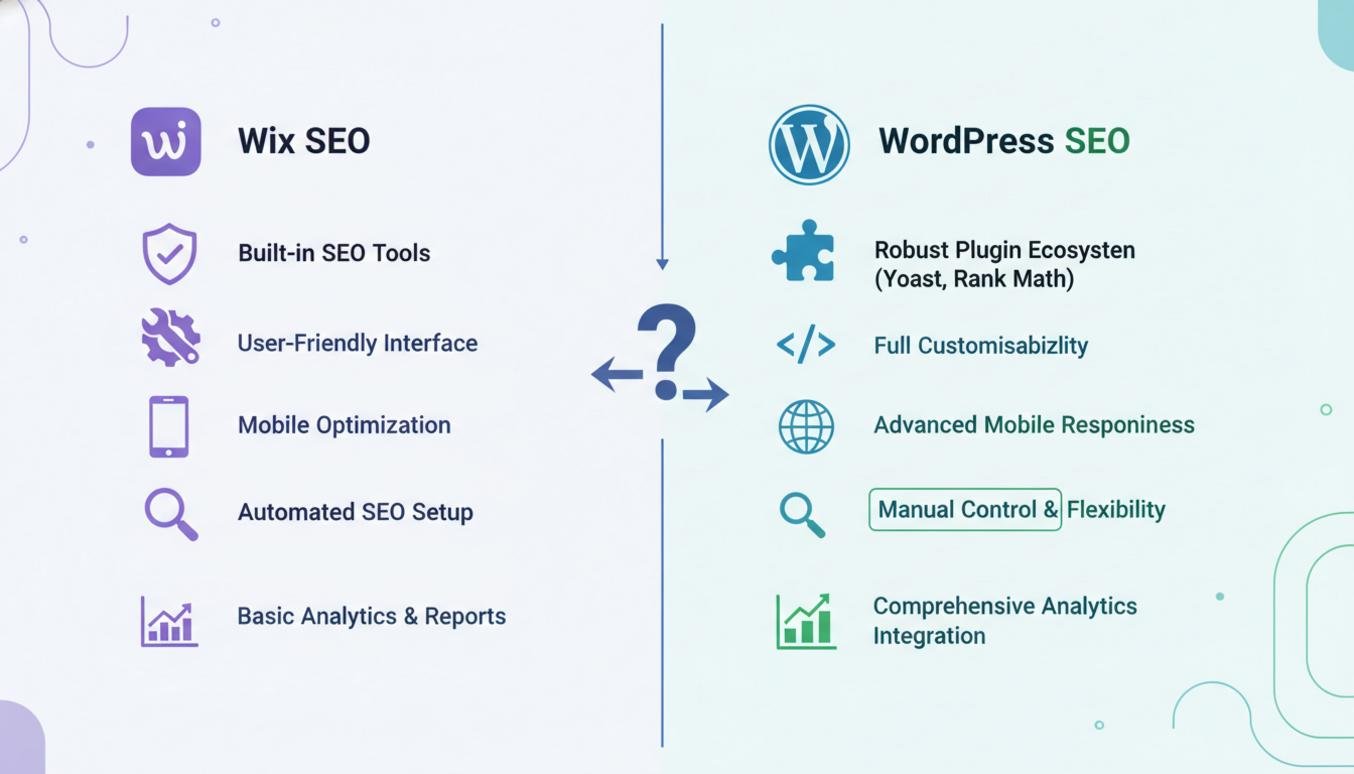
WordPress is renowned for its comprehensive SEO capabilities, largely due to its extensive range of robust SEO plugins. Plugins like Yoast SEO, All in One SEO Pack, and Rank Math offer detailed insights and tools to optimize every aspect of your site’s SEO, from meta descriptions to XML sitemaps.
User Testimonial:
“The versatility of WordPress plugins like Yoast have transformed the way I manage my site’s SEO. The real-time analysis of keyword usage and readability has been a game-changer for reaching my audience,” says Mike, a small business owner who switched from another platform.
Moreover, WordPress allows complete control over the technical aspects of SEO, facilitating customizability that caters to specific SEO needs. This flexibility makes WordPress an attractive choice for those with a bit of technical savvy and who want to dive deep into SEO customization.
Wix: SEO Built-In and User-Friendly
On the other hand, Wix offers built-in SEO tools designed to be intuitive and accessible for users of all levels, especially those not as versed in technical SEO. With its recent strides in improving SEO functionality, Wix users can enjoy features like Wix SEO Wiz, which provides a step-by-step plan tailored to the user’s business needs and goals.
User Testimonial:
“Wix has made SEO manageable for someone like me who isn’t a tech expert. The platform guides you through the essentials, ensuring nothing is overlooked,” says Sarah, a boutique owner who found success with Wix.
Wix’s platform is consistently updated to accommodate the latest SEO trends, supporting fundamental SEO practices such as URL structure, image alt text, and header tags right out of the box. This ensures that even beginners can effectively optimize their sites.
Direct Costs: Is There a Price for SEO?
While Wix includes its SEO tools in its subscription plans, the investment in SEO plugins on WordPress can vary significantly. Some popular plugins like Yoast offer free versions with premium features available at a higher cost. Depending on your business’s needs, the costs associated with advanced SEO plugins can add up, though often with commensurate value in terms of optimization capacity.
Making the Right Choice
When comparing Wix and WordPress for SEO, consider your business needs, your level of expertise, and how much control you want over your SEO efforts. If you desire a guided, less technical approach, Wix can be a practical solution. For those seeking a deeper level of customization and capability, WordPress may be the better choice.
Ultimately, both platforms have their merits and can be powerful tools to drive SEO success. Evaluate how each platform’s SEO tools align with your business strategy to make the most informed decision for enhancing your site’s visibility.
To visually break down the SEO features of both platforms, refer to our comparative infographic (image not shown here), which illustrates key strengths and considerations in choosing between Wix and WordPress for your SEO journey. By incorporating these insights and testimonials, you can make a confident decision tailored to your business’s success.
Mobile Responsiveness and Accessibility
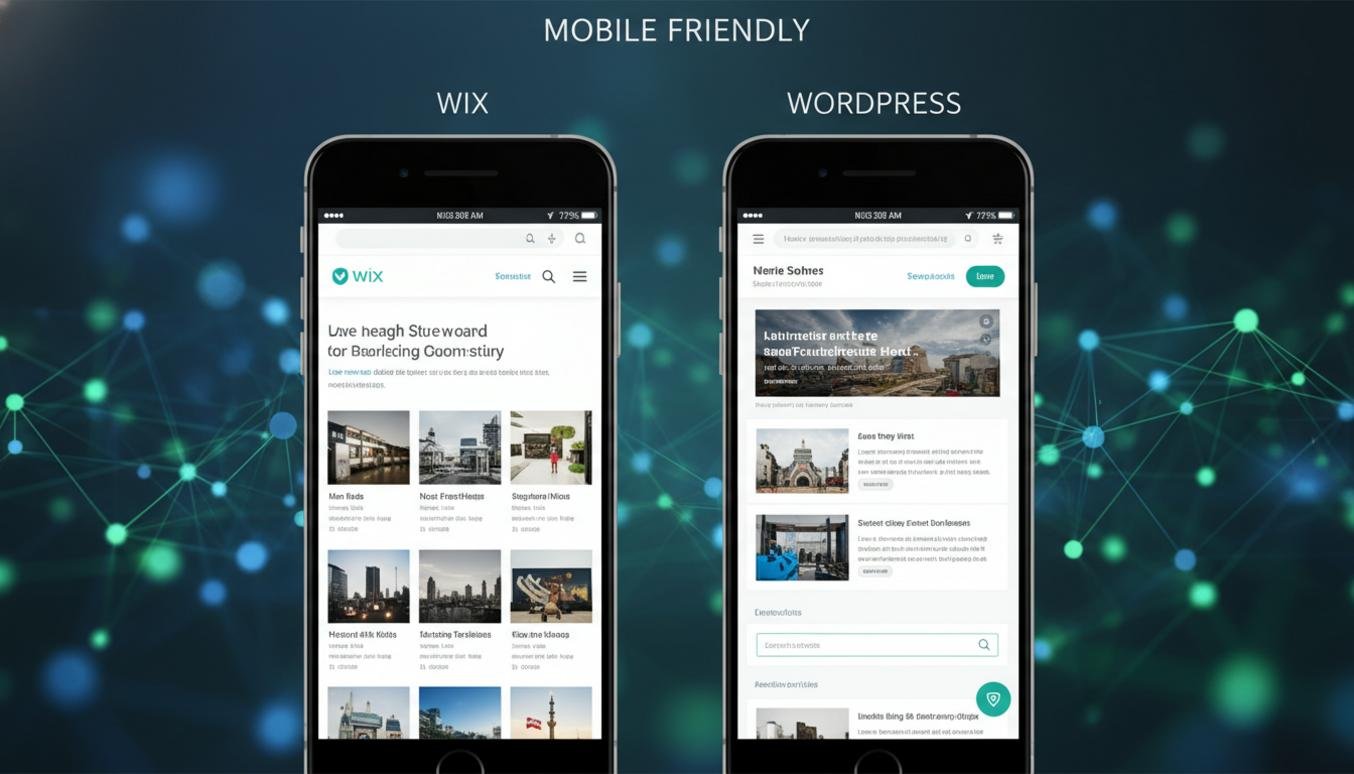
In today’s digital age, having a mobile-friendly website is not just an option, it’s a necessity. With the increasing number of users accessing websites through their mobile devices, small businesses must choose a platform that excels in mobile responsiveness and accessibility. Both Wix and WordPress claim to offer robust mobile-friendly features, but let’s dive deeper into what each platform brings to the table.
Wix Mobile Responsiveness
Wix offers a seamless mobile optimization process through its intuitive drag-and-drop editor. The platform automatically generates a mobile-optimized version of your site, which allows you to customize the mobile view independently from the desktop version. This flexibility can be appealing, especially for small business owners who might not have a web development background. According to Alice, a small business owner who runs a boutique on Wix, “The mobile site looked great with just a few clicks, and my customers love the fast loading times.”
However, while Wix does a commendable job at mobile optimization, some users have noted limitations in adaptability when customizing complex layouts for mobile devices. It might require additional tweaking to ensure every element looks perfect on all screen sizes.
WordPress Mobile Responsiveness
WordPress, on the other hand, offers mobile responsiveness through its vast ecosystem of themes and plugins. Most modern themes on WordPress are designed to be mobile-responsive out of the box. Furthermore, the platform’s flexibility allows for extensive customization, ensuring that your site looks as polished on mobile devices as it does on desktops. With the rise of mobile browsing in mind, it is important to stay updated on Web Design Trends for Interactive, Engaging, and Inspiring User Experiences.
Chloe, a restaurant owner using WordPress, shares, “I love how I can choose from numerous responsive themes and adjust every aspect until it looks just right on mobile.” The WordPress approach requires a little more technical insight, but the reward is a fully tailored mobile experience.
Accessibility
Accessibility is crucial for reaching a broader audience and complying with international standards. Wix has made strides in this area, providing features like alt text, anchor links, and a focus on vibrant color schemes that comply with accessibility standards. Though primarily consumer-focused, Wix still manages to include several useful tools designed with accessibility in mind.
WordPress stands out by offering a plethora of plugins specifically designed to enhance your site’s accessibility. WordPress themes can be chosen based on their accessibility-ready designation, ensuring they adhere to web content accessibility guidelines (WCAG). For businesses with a strong focus on inclusivity, WordPress provides the flexibility needed to meet even the most stringent standards.
Conclusion
While both platforms provide essential tools for mobile responsiveness and accessibility, the choice between Wix and WordPress largely depends on your business needs and technical capabilities. Wix offers an easier, more straightforward path for those who prefer a “set it and forget it” approach, while WordPress promises limitless customization and control for those willing to put in the extra effort. Ultimately, your choice should consider how much flexibility you need, the time you can invest, and the specific requirements of your business and audience.
Security Features Analysis
Security is paramount for any online business. Whether you’re a small e-commerce store or a personal blog, safeguarding user data and ensuring a secure browsing experience are essential. Let’s dive into how Wix and WordPress, two of the most popular website builders, handle security.
Wix Security Overview
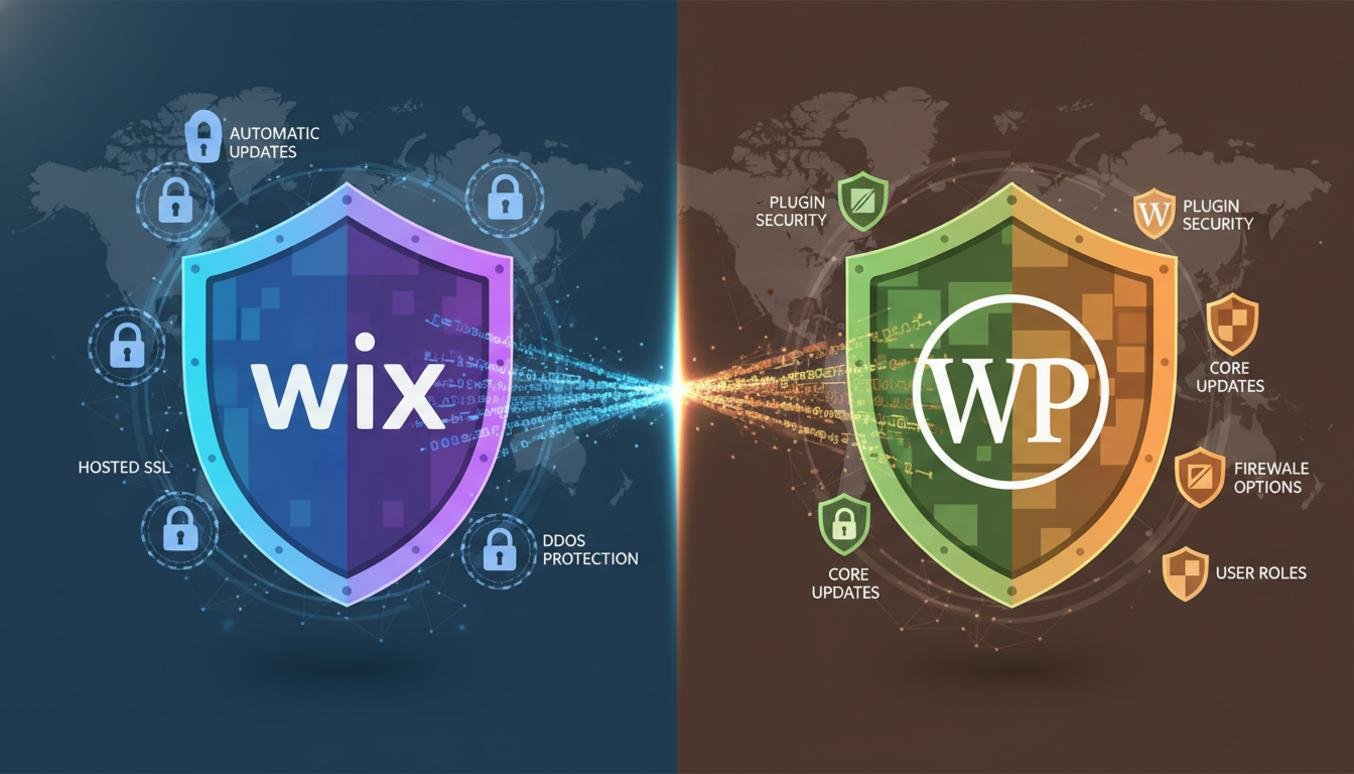
Wix is a fully managed platform, which means that all security updates and infrastructure maintenance are handled by Wix itself. This is a significant advantage for small businesses that don’t have a dedicated IT team. Here’s how Wix ensures security:
- Automatic Updates: Wix automatically updates its system to the latest security standards. This includes regular patches and upgrades without any action needed from the user.
- SSL Certificates: Every Wix site comes with a free SSL certificate that encrypts data transferred between the user’s browser and the website, ensuring that sensitive information remains protected.
- DDoS Protection: Wix’s hosting infrastructure includes DDoS (Distributed Denial of Service) protection. This means that your site is shielded from malicious attacks that could otherwise take it offline.
WordPress Security Overview
WordPress, being an open-source platform, offers flexibility but requires users to be proactive about security. Here’s how WordPress handles security:
- Regular Updates: WordPress frequently releases updates to address security vulnerabilities. However, it’s up to the website owner to manually update their WordPress installation unless they have enabled automatic updates.
- Plugins and Security Enhancements: With plugins like Wordfence and Sucuri Security, WordPress users can add layers of security to their sites. These plugins provide malware scanning, firewall protection, and more. For those interested in how security integrates into broader digital strategies, check out The Smartest Marketing Strategies for Small Businesses in 2025.
- SSL Support: While WordPress requires users to acquire their own SSL certificates, many hosting providers now include free SSL certificates as part of their packages.
Comparing Wix and WordPress Security
User Friendliness and Management: For users with limited technical skills, Wix’s approach is more user-friendly since all security features are built-in and managed by the platform. In contrast, WordPress requires users to actively manage security updates and plugins.
Customization vs. Control: While WordPress allows for extensive customization through various plugins, this also means additional responsibility for the user to choose reliable plugins and regularly monitor their site’s security. You might find insights on how to manage these responsibilities effectively in How to Run a Successful Business Campaign.
User Testimonials: Sarah M., a small business owner using Wix, shares her experience: “I appreciate not having to worry about security updates. Wix handles it all, which allows me more time to focus on my business.” Conversely, John P., who uses WordPress, highlights, “WordPress’s flexibility in choosing security plugins is unmatched, but it requires me to stay informed and proactive.”
Conclusion
Ultimately, the choice between Wix and WordPress depends on how much control and responsibility you want over your site’s security. Wix provides a hands-off approach with robust automatically managed security features, making it ideal for non-technical users. WordPress offers more flexibility but requires a proactive approach to security management, suitable for those who want more control.
Choosing the right platform is a vital decision that impacts your business’s online safety. Assess your needs, resources, and technical expertise before making your choice.
Plugins and Integrations: What to Consider
When choosing a platform for your small business website, the range and ease of use of plugins and integrations can play a pivotal role in enhancing functionality and ensuring your site meets all your business needs.
Wix Plugins and Integrations
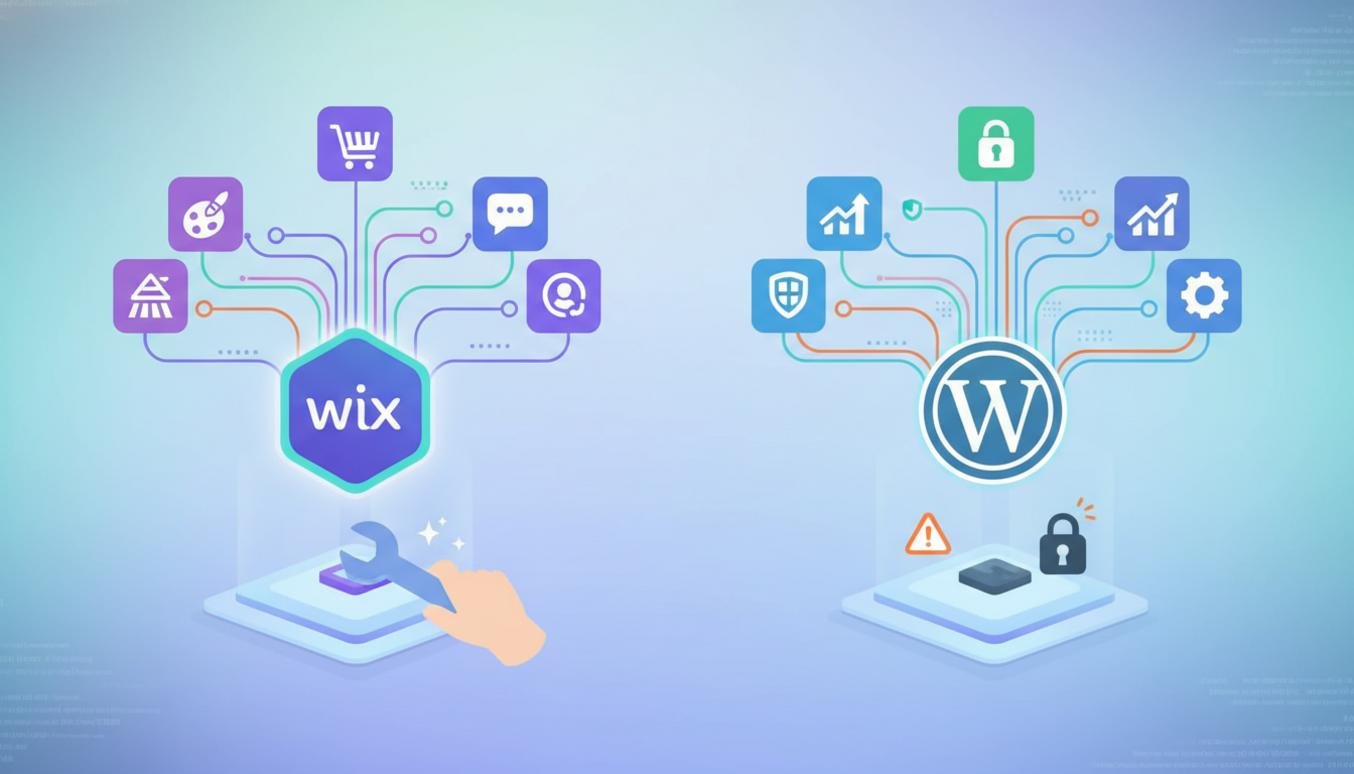
Wix is known for its intuitive drag-and-drop builder and its user-friendly approach extends to its App Market, which hosts a variety of plugins (known as apps) designed to enhance any Wix website’s functionality. The App Market includes integrations for marketing, sales, social media, and more, making it an excellent choice for users who prefer a more guided experience. Popular apps include Wix Chat for real-time communication, Wix Bookings for scheduling, and various eCommerce solutions.
Installing apps on Wix is straightforward and typically requires just a few clicks. This simplicity makes Wix highly accessible for small business owners who may not have extensive technical know-how. However, it’s worth noting that the selection, although growing, is not as extensive as WordPress and might not satisfy users with very niche requirements.
One user testimonial states, “As a small business owner with limited tech skills, the ease of adding chat support to my Wix site through their app was a game-changer!”
WordPress Plugins and Integrations
WordPress’s greatest strength lies in its flexibility and the vast number of available plugins. With over 60,000 plugins in the official directory, WordPress provides solutions for nearly any imaginable requirement, including SEO optimization, advanced analytics, enhanced security, and much more. For more on the importance of SEO in maximizing business potential, check out The Smartest Marketing Strategies for Small Businesses in 2025.
The installation process on WordPress is slightly more complex, particularly for self-hosted WordPress.org users, who need to manage the hosting and domain setup. However, this extra step is often seen as a worthwhile trade-off for the expanded customization options that WordPress provides. Advanced users can even modify plugin code for bespoke functionality, offering unmatched flexibility.
Users often appreciate the depth of options on WordPress. A satisfied user notes, “The amount of plugins available on WordPress blew my mind. I was able to manage my blog, calendar bookings, and even a webshop—all with integrations!”
Cost and Security Considerations
The cost of plugins can vary significantly on both platforms. Wix operates on a freemium model, where most basic features are free, but premium functionality often requires a paid plan. When budgeting for Wix, consider any apps essential for business functionality to ensure you select the appropriate plan.
Conversely, WordPress itself is free to use, but premium plugins and the costs associated with hosting, domain registration, and premium themes can add up over time. However, this model often offers more bang for the buck due to the depth and breadth of available plugins across all kinds of applications.
In terms of security, users must be mindful. Although both platforms offer secure environments, plugins can introduce vulnerabilities if not regularly updated. It’s crucial to only install plugins from reputable developers and maintain regular updates to mitigate security risks. To explore more about ensuring your site is up to standard, refer to 2024 Web Design Trends for Interactive, Engaging, and Inspiring User Experiences.
Ultimately, small businesses should weigh the ease of use and guided simplicity of Wix against the expansive flexibility and capabilities of WordPress when deciding which platform’s plugins and integrations align most closely with their business needs.
Conclusion: Making the Right Choice
Choosing the best platform between Wix and WordPress depends significantly on your specific business needs. This section will guide you through their respective strengths and weaknesses, helping you make a well-informed decision that aligns with your goals for scalability, budget, and technical support.
Pros and Cons Summary
Wix:
Pros:
- User-Friendly: Wix is known for its intuitive drag-and-drop interface that makes it easy for anyone to build a website, even without technical skills.
- All-Inclusive Package: Provides hosting and domain services as a part of its package, offering an easy setup process.
- Cost-Effective for Small Scale: Ideal for businesses with simpler needs or those getting started on a budget. This is particularly beneficial for startups focusing on capturing micro-moments. Learn more about leveraging micro-moments.
- Rapid Setup: You can get a website live quickly with minimal complexity.
Cons:
- Limited Scalability: As your business grows, you may find Wix somewhat limiting in terms of customization and scalability.
- Less Control Over SEO: While it has improved, SEO capabilities are not as robust as WordPress.
- Professional Features Might Add Up: Advanced features or heavier customization options may increase costs unexpectedly.
WordPress:
Pros:
- Highly Customizable: With a vast library of plugins and themes, WordPress offers unmatched customization options.
- Superior SEO Tools: Extensive SEO plugins like Yoast SEO help in optimizing your website for search engines efficiently. Consider how this aligns with larger marketing strategies, as discussed in Smartest Marketing Strategies for Small Businesses in 2025.
- Scalability: Perfect for growing businesses, WordPress sites can handle increased traffic well with the right setup.
Cons:
- Complex for Beginners: New users might find WordPress overwhelming due to its steep learning curve.
- Cost Variability: While the bare platform is free, costs can escalate with premium themes, plugins, and hosting.
- Requires Maintenance: Regular updates and security management can be a bit of a hassle for those who aren’t tech-savvy.
Choosing Based on Needs
- Scalability: If you anticipate significant growth or require advanced customization, WordPress might be the better choice due to its flexibility and capabilities to manage large volumes of traffic.
- Budget: For those operating on a tight budget or requiring a simple online presence, Wix provides a straightforward, cost-effective solution without hidden extras.
- Technical Support: Wix offers constant customer support, which can be very reassuring for users with minimal tech skills. WordPress, on the other hand, has a vast community and extensive online resources, but business owners must be prepared to invest time or hire expertise for technical issues.
Real User Testimonials:
- Wix User: “Launching my online store with Wix was a breeze. As someone who isn’t tech-savvy, the customer support and ease-of-use have been invaluable!”
- WordPress User: “Though it took me a while to master, WordPress provides me the freedom to expand my business without limits. It’s definitely worth the initial learning effort.”
In conclusion, both Wix and WordPress have unique strengths that cater to different business needs. We recommend evaluating your current business scale, growth projection, and your readiness to manage website maintenance. This will be crucial in choosing correctly, ensuring your online platform supports your business objectives efficiently.”

Conclusion
In conclusion, choosing between Wix and WordPress comes down to weighing ease of use versus customization capabilities. Wix caters to beginners with its simple setup, while WordPress offers flexibility for those with technical acumen. Consider your priorities to make the right choice for your business.